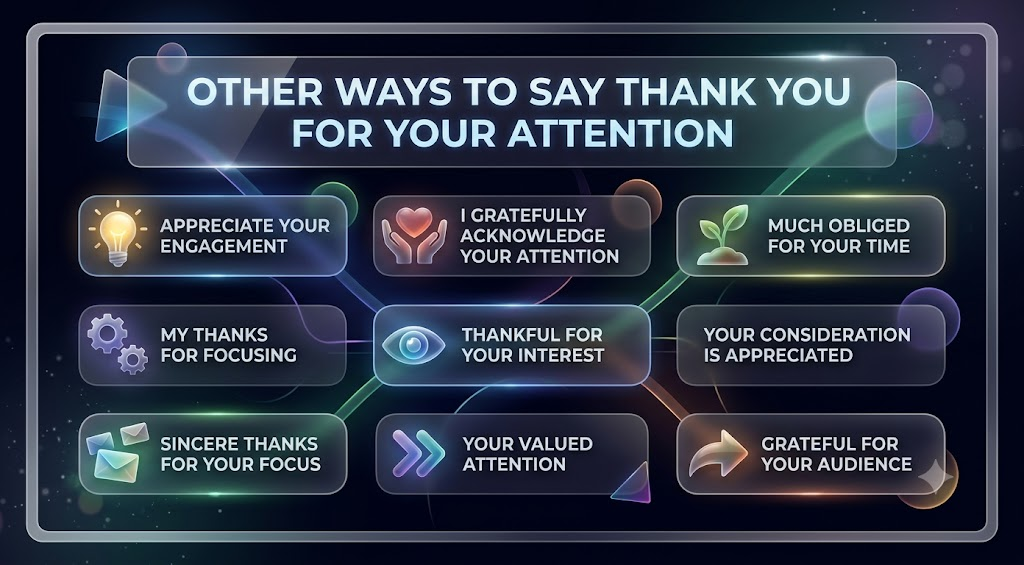
The phrase Other Ways To Say Thank You For Your Attention is useful for anyone who wants to communicate with confidence and professionalism. Whether you are sending an email, delivering a presentation, writing a report, or ending a speech, choosing the right closing words leaves a lasting impression. A thoughtful expression of gratitude can make your message sound more genuine and engaging.
Using different alternatives also helps you avoid repetition. Instead of ending every conversation with the same phrase, you can match your closing to the situation and your audience. This guide explores meaningful expressions, explains when to use them, and provides practical examples that improve both personal and professional communication.
Why It Is Helpful to Use Different Expressions
Repeating the same closing phrase in every message can make your communication feel predictable. By learning different expressions, you show creativity while maintaining politeness. The right wording also demonstrates emotional intelligence and an understanding of your audience’s expectations.
Different situations call for different levels of formality. A business presentation requires a professional tone, while a friendly conversation allows a warmer approach. Knowing several alternatives of Other Ways To Say Thank You For Your Attention helps you adapt naturally and ensures your message ends on a positive and memorable note.
When to Replace “Thank You for Your Attention”
Although “Thank you for your attention” is widely accepted, there are moments when another phrase sounds more appropriate. For example, after an interactive meeting, you may want to thank people for their participation rather than simply their attention. Choosing a suitable alternative improves clarity.
Similarly, if you are speaking to customers, students, or colleagues, personalized appreciation often creates a stronger connection. A thoughtful closing reflects respect for the audience’s time and effort, making your communication more engaging and meaningful.
Professional Alternatives
Professional settings require language that is respectful and polished. These alternatives work well in business emails, conferences, presentations, and workplace meetings where maintaining credibility is important while expressing appreciation sincerely.
Some excellent professional alternatives include:
- Thank you for your time.
- I appreciate your attention.
- Thank you for listening.
- Thank you for your consideration.
- I appreciate your interest.
- Thank you for being here.
- Thank you for your valuable time.
- Your attention is greatly appreciated.
Friendly Alternatives
When communicating with friends, classmates, or familiar colleagues, a relaxed and warm expression often sounds more natural. Friendly alternatives make conversations feel comfortable without losing politeness or appreciation.
Examples include:
- Thanks for listening.
- Thanks for sticking around.
- I appreciate you taking the time.
- Thanks for hearing me out.
- I’m grateful you listened.
- Thanks for your support.
- I appreciate your patience.
- Thanks for being so attentive.
Formal Alternatives for Business Communication
Formal communication often demands elegant wording that reflects professionalism. Whether you are addressing executives, clients, or conference attendees, carefully selected closing remarks enhance your credibility and leave a positive impression.
You might use phrases such as “Your time and attention are sincerely appreciated,” “Thank you for your thoughtful consideration,” or “I appreciate your valuable attention today.” These alternatives sound polished while expressing genuine gratitude in professional environments.
Casual Alternatives for Everyday Conversations
Everyday conversations usually benefit from simple and natural language. There is no need to sound overly formal when talking with friends, family members, or people you know well. Casual appreciation often feels more authentic.
Good examples include “Thanks for listening,” “I appreciate you,” “Thanks for hanging in there,” “Thanks for paying attention,” and “I’m glad you took the time to listen.” These expressions are easy to understand and suitable for daily interactions.
Alternatives for Presentations
Public speakers often want to finish confidently while showing appreciation for their audience. Instead of ending every presentation with the same phrase, choosing different closings keeps your delivery fresh and memorable.
Effective presentation endings include “Thank you for joining me today,” “I appreciate your participation,” “Thank you for your interest,” “Thank you for your thoughtful attention,” and “I appreciate everyone who took the time to attend this session.”
Alternatives for Emails
Professional emails should end politely while encouraging continued communication. Your closing statement should match the purpose of your message and maintain a respectful tone throughout the conversation.
Useful email closings include “Thank you for your consideration,” “I appreciate your time,” “Thank you for reviewing this information,” “I look forward to your feedback,” and “Thank you for taking the time to read my email carefully.”
Alternatives for Academic Settings
Teachers, students, and researchers frequently communicate through presentations, reports, and classroom discussions. Choosing suitable expressions demonstrates professionalism while respecting the audience’s attention and participation.
You may say “Thank you for your engagement,” “I appreciate your thoughtful questions,” “Thank you for participating,” “Thank you for your interest in this topic,” or “I value your time and attention during today’s discussion.”
Choosing the Right Phrase
Selecting the best expression depends on your audience, purpose, and communication style. Consider whether the setting is formal, informal, educational, or professional before deciding which phrase fits naturally.
A sincere message is always more effective than one that sounds forced. Keep your wording simple, respectful, and appropriate for the situation. Matching your closing to the audience helps create stronger relationships and improves overall communication.
Common Mistakes to Avoid
One common mistake is using language that is either too formal or too casual for the situation. An overly relaxed closing may appear unprofessional, while an extremely formal phrase might sound distant in friendly conversations.
Another mistake is repeating the exact same expression every time you communicate. Expanding your vocabulary makes your writing more engaging and demonstrates confidence. Always proofread your message to ensure your closing fits naturally with the rest of your content.
Tips for Sounding More Genuine
People appreciate sincerity more than complicated language. Instead of focusing on impressive words, choose expressions that honestly reflect your appreciation. Authentic gratitude strengthens professional relationships and builds trust with your audience.
Whenever possible, personalize your message. Mention the audience’s participation, feedback, or support rather than relying on generic statements. A customized closing feels warmer, more memorable, and far more meaningful than a standard phrase.
Examples in Real-Life Situations
Imagine ending a business presentation by saying, “Thank you for your valuable insights and participation today.” This sounds more engaging than using a routine closing because it recognizes the audience’s involvement throughout the session.
In an email, you might write, “I appreciate you taking the time to review my proposal.” During a classroom discussion, saying, “Thank you for your thoughtful questions,” shows appreciation while encouraging future interaction and active participation.
Final Thoughts
Learning Other Ways To Say Thank You For Your Attention helps you communicate more effectively in every setting. Whether you are speaking at an event, sending an email, or finishing a classroom presentation, using the right closing creates a stronger and more professional impression.
Expanding your vocabulary allows you to express gratitude in ways that feel natural, sincere, and appropriate for different audiences. By choosing thoughtful alternatives and matching them to each situation, you can end every conversation with confidence, respect, and lasting positivity.



Leave a Reply